Golden Seal
(Phoca aureus)
Bite 15+2, Blubber +2, Dive 15, Large 18,
Strong 15,
Swim Fast 12
Distribution: Sshorg Sea
Habitat: Coastal
Golden seals are moderately sized animals, with a lustrous golden-brown coat. They are fairly typical small seals, although they prefer much warmer waters than most of their kin. They feed on fish in the shallow waters of the Sshorg Sea, and pull themselves onto the sandy beaches of certain of the East Isles to breed and give birth. Their breeding beaches are generally on smaller islands, uninhabited by humans, but they especially congregate on the island of Onparatambo, where they mingle with an ancient tribe of seal-hsunchen who live there.
|
Numerous other species of small seal are found in northern seas around Genertela. Many of these are hunted for meat by locals. The pups of the jet and ribbon seals of Kahar's Sea are born with a beautiful white coat, and are hunted by club-wielding Kralori. The statistics for all of these animals are similar to those of the golden seals. |
(Eumetopias
jubatus)
Bite 5W+2, Blubber +3,
Dive 15, Large 2W, Strong 18,
Swim Fast 12, Run Over Rough Terrain 12
Distribution: Neliomi and Kahar Seas
Habitat: Coastal
Named for the large manes of the males, sea lions are much more mobile than true seals on land, being able to use all four flippers to waddle about. They are generally friendly unless threatened. They breed on remote, rocky islands in the northern seas, and give birth to young with black fur, which is not considered as valuable as the white pelts of true seal pups. Nonetheless, trolls, Yggites, and the folk of the Whalebone Islands all hunt them for meat, and the Whalebone Islanders also use their skin for making kayaks.
Hetara
was a daughter of one the carls in Valind's clan, a minor
goddess who
suffered
at the hands of her kin. One day, the warlike sea gods captured her in
one of
their raids, but a wild seal-spirit named Yamet rescued her from their
clutches. Refusing to return to her former kin, she won his heart after
a
tempestuous relationship, and the sea lions, creatures of both the sea
and
storm-swept islands, are their children.

(Globicephala
melas)
Bite 10W+3, Blubber +5,
Dive 8W, Hunt by
Darksense 5W, Inquisitive
15, Large 18W, Leap 15,
Strong 15W, Swim Fast 18
Distribution: Worldwide, except Neleomi and White Seas
Habitat: Coastal and offshore
Resembling small, black-skinned killer whales, pilot whales are found in all but the coldest of seas. Unlike their larger relatives, they eat only cold-blooded prey, such as squid and fish. They travel in large herds, of a few dozen individuals each, often together with ludoch herdsmen.
Pilot
whales were once dolphins, the scouts of the sea gods. The ludoch tamed
them,
and the powers of their gods transformed them to be the large creatures
they
are today, herd animals for the ludoch tribes.

(Delphinapterus
leucas)
Bite 2W+3, Blubber +5,
Dive 5W, Hunt by
Darksense 5W, Inquisitive
15, Large 15W, Leap 15,
Strong 12W, Swim Fast 12
Distribution: White Sea
Habitat: Cold salt water
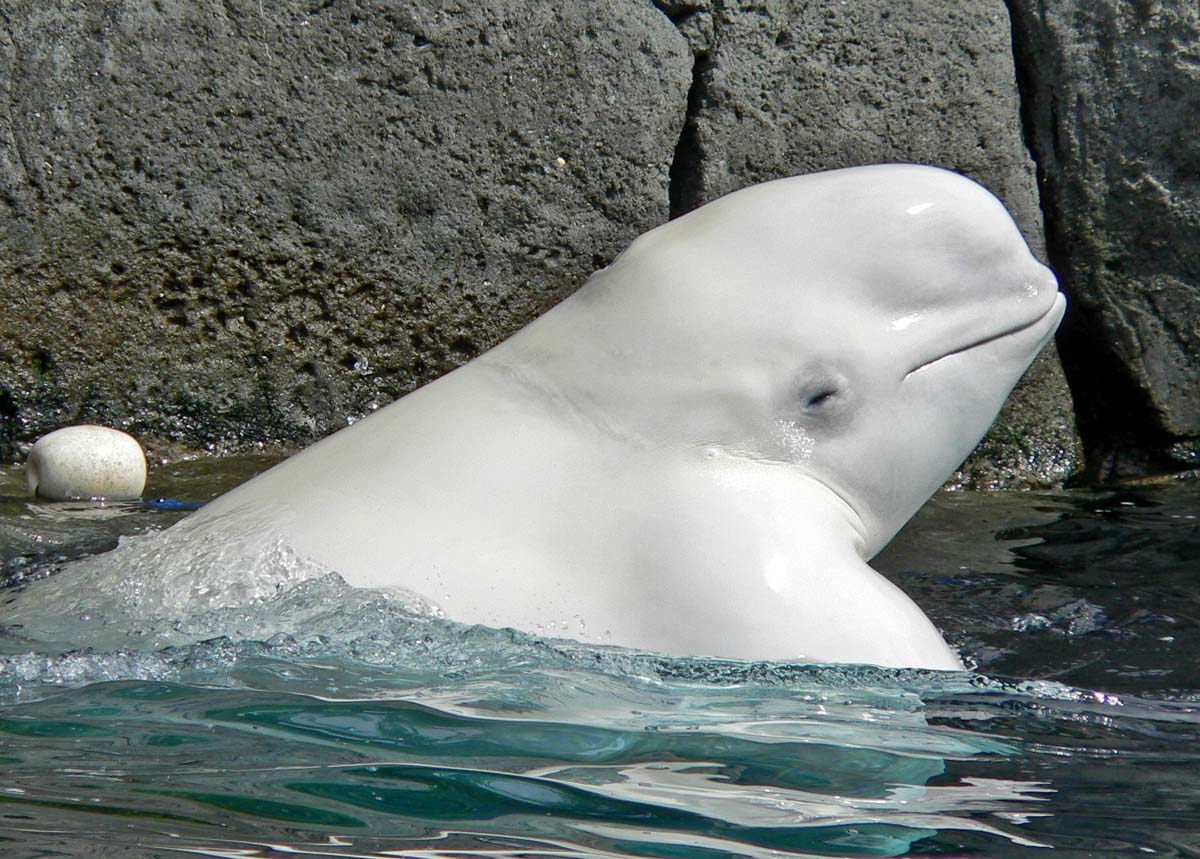
These small, pure white whales swim in herds of several hundred in the icy coastal waters of the White Sea. They eat fish, worms and molluscs, and are as adept at cooperative hunting as the larger killer whales. Unlike other whales, they have a flexible neck, allowing them to nod and turns their heads. The few whaling ships that sail the White Sea concentrate almost exclusively on the beluga.
The
belugas are children of Keniryan, the god of the White Sea. When the
Glacier
stretched over the western parts of his domain, the dolphins bred by
his
kin to combat the storm gods were cut off, so he created these animals
to
patrol his waters instead.
(Trichechus
lacertarum)
Dodge Attack 12, Thick Skin +2, Acute
Hearing 12,
Docile 10, Forage 15, Large 5W, Strong 15
Distribution: Dashomo and Jorkar Seas.
Habitat: Coastal shallows and river estuaries
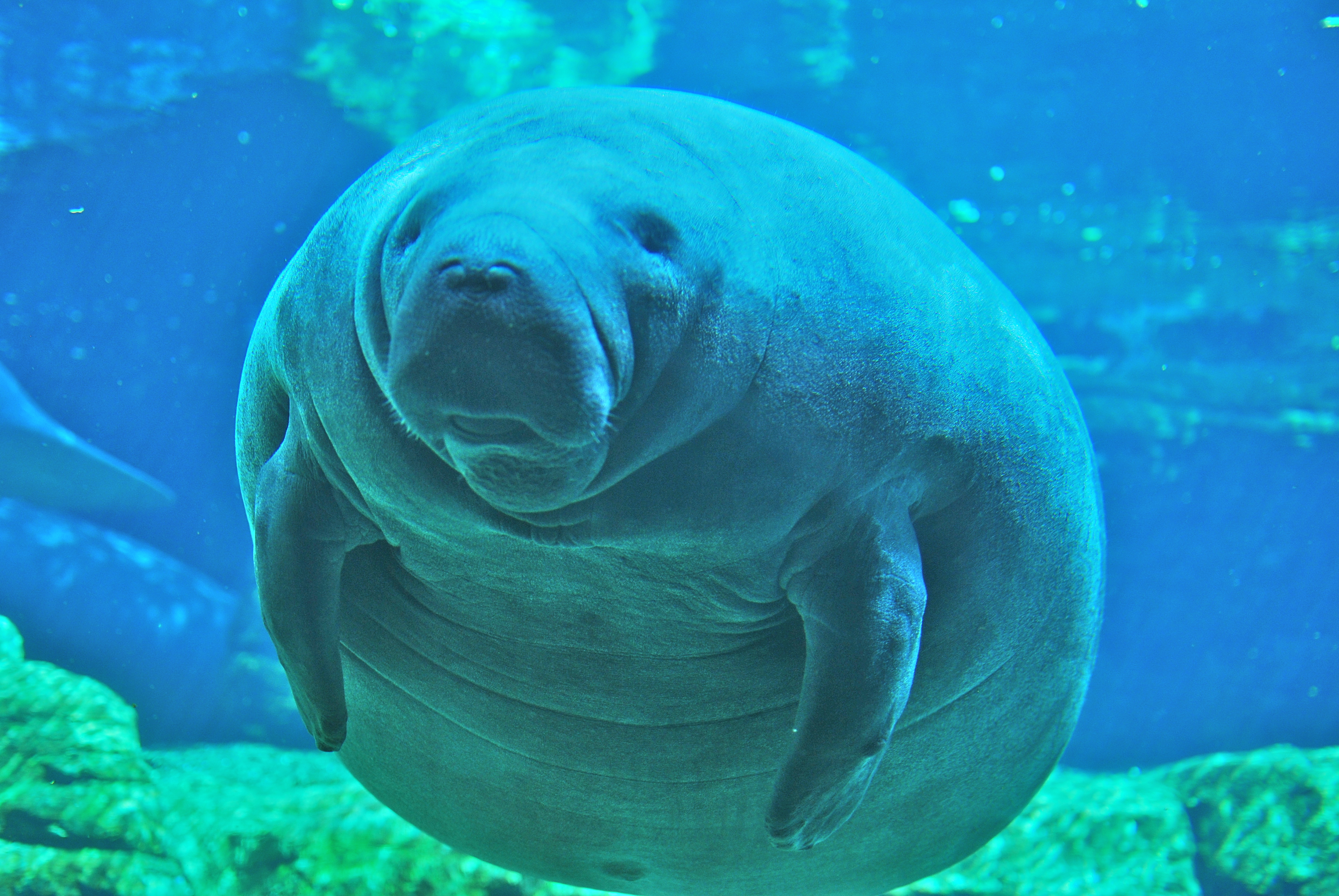
Manatees are large, ponderous animals common in western Pamaltelan waters. Their body is similar to a dolphin's, but bulkier, with paddle-shaped tails, blunt snouts and prehensile, bristly lips. Also unlike dolphins, they are herbivores, browsing on sea-grasses and other vegetation. Harmless and placid animals, their usual response to attack is to flee, putting on a burst of speed quite surprising in what are otherwise slow-moving animals. In Enkloso and Vralos, manatees are raised in pens and harvested for their delicious meat, tough hides and oil for cooking.
When
Pamalt first made the manatees, they had legs, and wandered along the
shoreline, eating the plants that grew there. They were peaceful and
harmless
creatures, and struggled to survive during the Gods War, when enemies
came from
the north and threatened to eat them all. Pamalt took away their legs
and
taught them to swim, then hid them in sheltered coves among the
islands. When
the Darkness ended, they came forth, and spread the coasts, where they
still
live today.
(Balaenoptera
acutostrata)
Tail Slap 12W, Blubber +6,
Dive 10W, Large 2W2, Leap 15,
Strong 15W
Distribution: Worldwide, except White Sea
Habitat: Coastal waters
The smallest of the baleen whales, a mere twenty-five feet in length, minkes are found in all seas except the White. Although relatively common, they are shy animals, and rapid swimmers, so that they are generally less than ideal for whalers.
They
were fifth and last children of Ombarath, born when his power near the
surface
of the seas began to wane as he sank back into the depths. They had to
survive
on their own, and so became more cautious than their elder kin.

(Megaptera
gibbidorsum)
Tail Slap 15W, Blubber +8,
Dive 12W, Inquisitive
15, Large 5W3, Leap 15,
Strong 18W2, Swallow
Creature 18W, Water Magic 5W (minimum)
Distribution: Worldwide
Habitat: Salt water
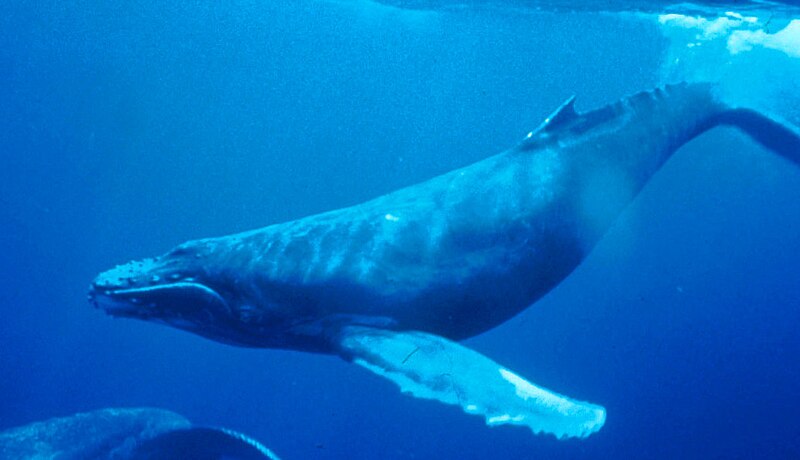
Distinguished by long flippers and by its knobbly head, this black whale is found throughout the world's oceans, and is rarely found in a group of more than three individuals. They are intelligent beings, with a rich, if alien, culture of poetry and song. Their songs echo for many miles through the seas, so that they remain in contact even when, to human minds, they are far apart. Sadly, their intelligence does not always prevent them from being a target for human whalers.
They
were the third children of Ombarath, an attempt to understand the minds
of
surface dwellers - which failed, as all his other attempts did.
(Eschrichtius
robustus)
Tail Slap 15W, Blubber +8,
Dive 18W, Inquisitive
15, Large 5W3, Leap 15,
Strong 18W2, Swallow
Creature 18W
Distribution: Neliomi Sea
Habitat: Coastal waters
Popular targets for Fronelan whalers, these pale grey animals are similar to, but smaller than, right whales and live in the coastal waters of the Neliomi Sea, migrating from Seshnela to northern Fronela and back each year. They feed from the bottom of the shallow seas, sucking up shrimp from the silt of the seabed. They are active and playful, and usually travel alone.
They
were the second children of Ombarath, born of his depression when his
initial
overtures were rebuffed.


(Balaena
glacialis)
Tail Slap 18W, Blubber +9,
Dive 8W, Inquisitive
15, Large 10W3, Leap 15,
Strong 5W3, Swallow
Creature 2W2
Distribution: Solkathi, Rozgali, Kahar and Jorkar seas.
Habitat: Coastal waters
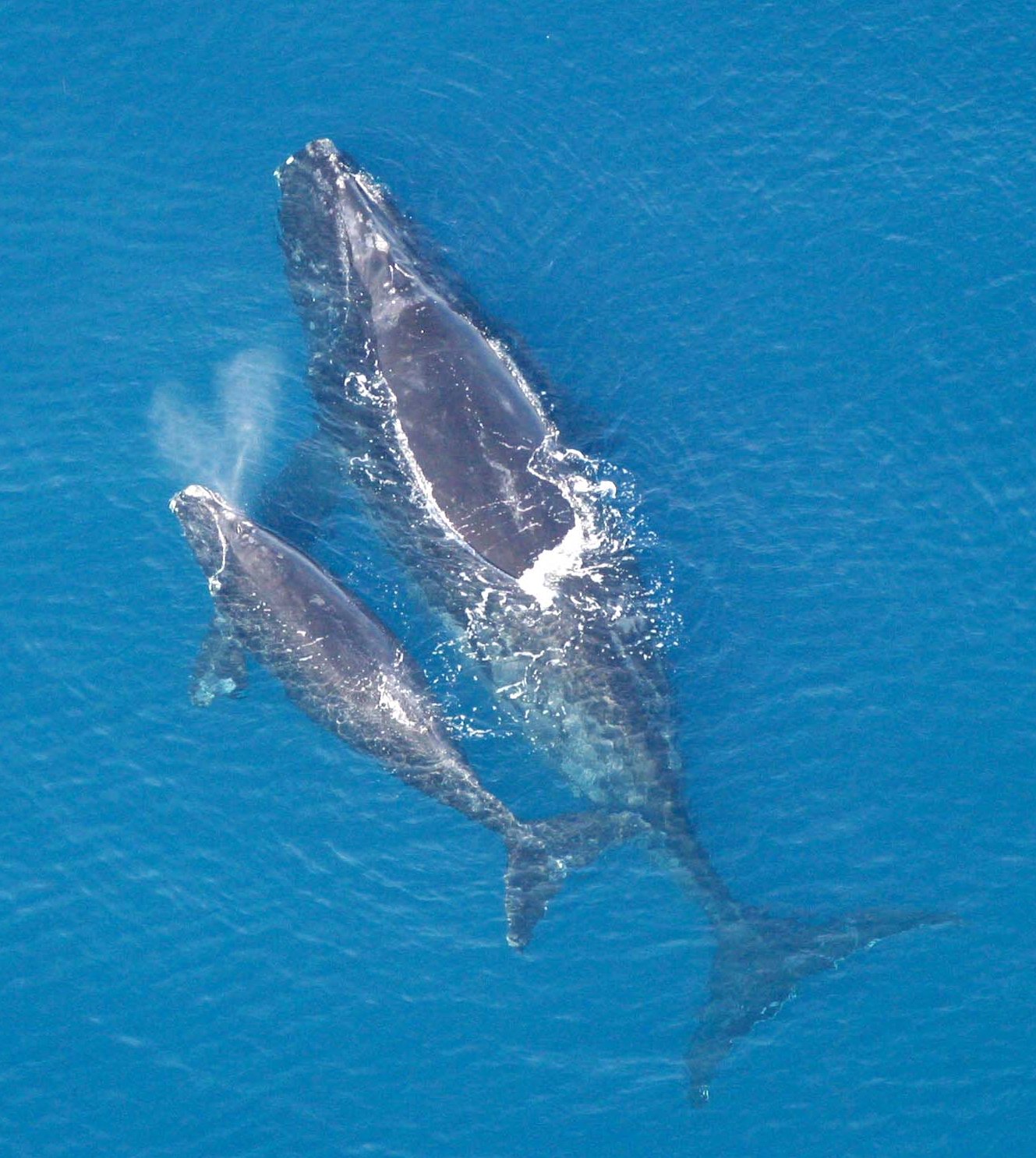
These bulky black whales can be easily distinguished by the encrusted growths on their heads. They travel alone or in small groups of up to nine individuals. They are named 'right' whales because they the best possible target for whalers; they live close to the shore, float when dead, and provide large quantities of valuable meat, oil and whalebone. Where present, they are by far the most common target of such whalers.
They were the fourth children of Ombarath, his last attempt to create ambassadors to the gods of the air, and so live closer to land, and to the surface, than any of their kin.
Combat
Tactics: Right whales are large enough to
swallow a man-sized target in a single gulp with a single roll against
its
Swallow Creature ability opposed by any suitable defence. Any victim
will
quickly die without impressive magical aid. Against larger foes they
will slap
with their tails and attempt to flee.
(Physeter
macrocephalus)
Bite 18W+3, Blubber +9,
Tail Slap 18W, Dive 10W3, Hunt by
Darksense 12W, Large 5W3, Leap 15,
Strong 18W2, Taste Water 5W
Distribution: Worldwide
Habitat: Offshore, over oceanic depths
The majestic sperm whale is the largest of all the toothed whales, an adult male reaching 65 feet long and 70 tons in weight. They travel all the oceans of the world, with the large bulls sometimes even travelling into the Outer World. More commonly, they enter the immortal realm by diving down to the lowest reaches of the Niiadic zone for up to an hour at a time. Here the whales do battle with giant squid and other monsters of the depths which leave scars visible on the skin of all adults.
Schools of sperm whales are variable in size, although twenty members are typical. Members of these groups are cooperative, and will protect each other when threatened. Solitary whales are often also encountered, especially near the borders of the Outer World. They are relatively common targets for whalers, who value the 'ambergris' oil contained in the huge gland at the top of their heads.
The conflict between the sperm whales and the giant squid dates back to before even the Gods War, and its origins are unknown in the myths of the ludoch and other surface-dwelling creatures, although it is clear that the active and aggresive sperm whales are not children of Ombarath. The ludoch believe, however, that many of the foes of the sperm whales are terrible indeed, and utterly hostile to all creatures that breathe air, and are therefore grateful to those that fight them.
Combat
Tactics: Sperm whales are so large that they
can swallow a man sized target already in the water by making a Bite
roll, opposed
by any suitable ability. If the whale succeeds, the victim is consumed
in a
single gulp, and will surely perish without the aid of impressive
magics. They
battle the monsters of the deep with their great jaws, by beating with
their
tail flukes, and perhaps also by magic unknown to surface-dwellers.
Image: Sperm
whale

(Balaenoptera
musculus)
Tail Slap 18W, Blubber +10,
Dive 5W2, Inquisitive
15, Large 18W3, Leap 10,
Strong 12W3, Swallow
Creature 10W2, Water Magic
15W (minimum)
Distribution: Worldwide
Habitat: Offshore waters
These vast blue-grey creatures are the largest non-magical creatures of Glorantha. They often dive into the Niiadic Zone of the deep oceans where they are found. Their large size discourages many, but not all, whalers. Like the humpbacks they are intelligent, and they also know some potent magic, but their minds are alien and incomprehensible to humans; even the ludoch have difficulty understanding their slow and deep thoughts.
They
were the first children of Ombarath, still filled with his watery power.
Image: Blue whale
